














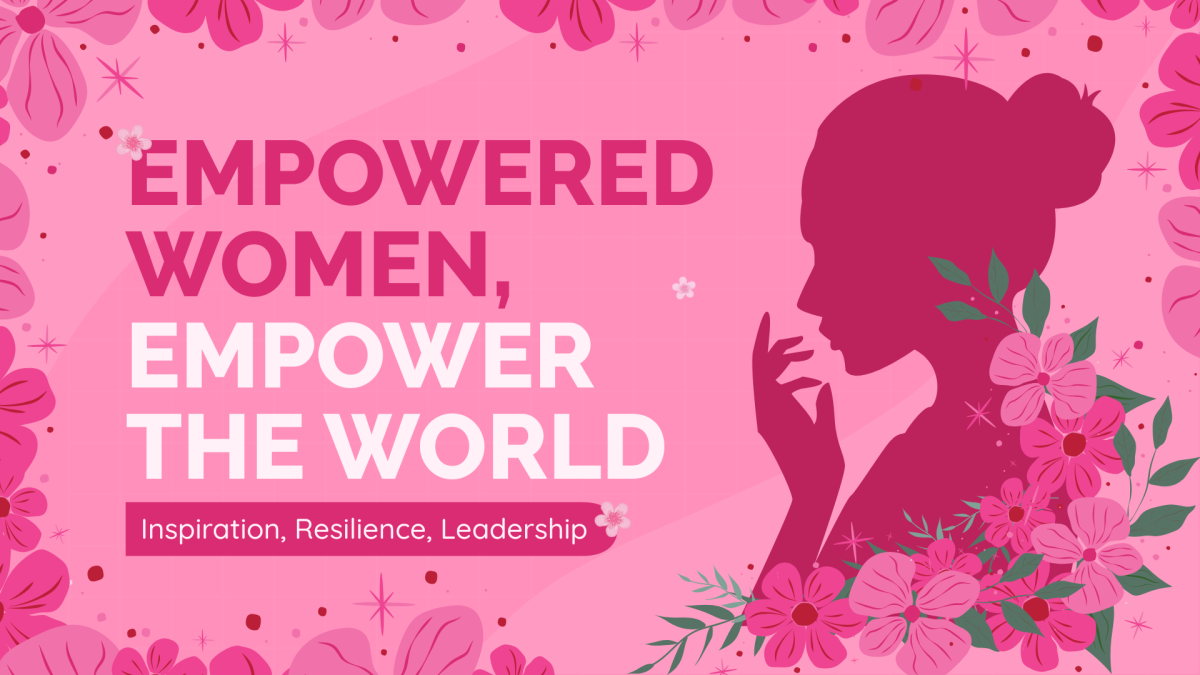
Women’s History Month is an annual celebration that occurs in March to recognize the achievements and contributions of women throughout history and in modern society. It serves as a time to highlight the accomplishments of women across science, politics, literature, the arts, and activism. The purpose is to promote gender fairness, challenge stereotypes, and educate people about the diverse roles women have played in shaping history.
However, Women’s History Month began as a local celebration in California in 1978, evolved into a national observance by 1980 with President Carter’s orders, and was officially designated as a month-long celebration in March by Congress in 1987. According to “National Geographic Kids”, “Since the first Women’s History Week in 1978, other countries have joined the United States in honoring women and their contributions to history and culture, including Canada and Australia.” Its focus has shifted from recognizing general contributions to embracing a more inclusive, diverse representation of women and addressing current issues of gender equality and empowerment.
Among the important figures often spotlighted during Women’s History Month are Elizabeth Cady Stanton and Susan B. Anthony, who fought for equality for women in the mid-19th century, more than 70 years before the 19th Amendment gave women the right to vote in the United States in 1920; Harriet Tubman, a spy who led enslaved people to freedom during the Civil War; Amelia Earhart, one of the world’s first female pilots in 1937; Madeleine Albright, who became the first female Secretary of State in 1996; and Misty Copeland, the first African-American woman to be named a principal dancer, the highest level, in the 75-year history of the American Ballet Theatre in 2015.