














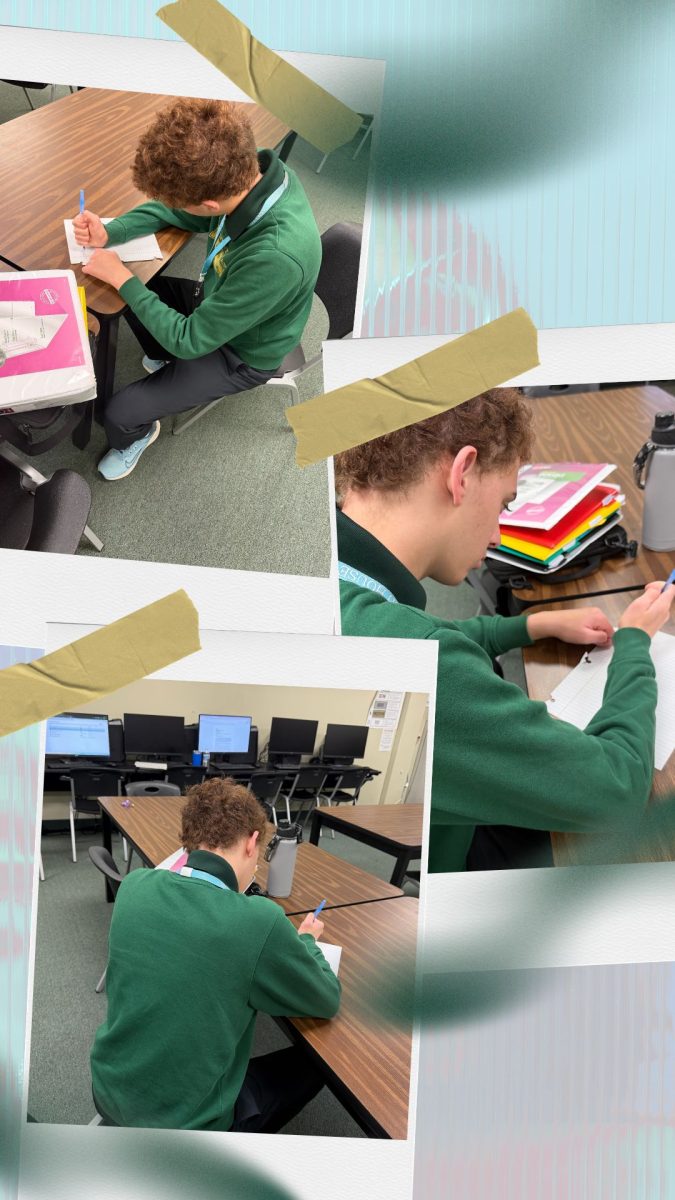
Students have to study, whether you’re a workaholic overachiever who strives for 100s or you’re just sliding by playing the Kahoot, studying is a crucial step to academic success. As we enter the final stages of the 25-26 school year, students around STVM polish off their report cards and finish strong.
Especially with final exam and AP Test dates approaching, students are rapidly cramming a year’s worth of material into a couple of weeks of studying. But how? How do you study with maximum efficiency, not wasting a second of your precious time? Today, with expert advice and scientifically backed research on the best strategies to recall the most info, I will help you avoid some popular studying myths and properly study-max.
According to the esteemed, experienced STVM teacher, Mrs. Godshalk, Exams/AP tests require planning and effort both before and on test day. The following tips are her straightforward guide to studying.
1) Don’t wait until the last minute. Start preparing days or weeks ahead; make a schedule and commit to it. Use “downtime” to be productive with the tools the teacher has provided.
2) “Chunk” your review/preparation. Often, your teacher will have divided the material into units of study; make a list of the units and commit to reviewing one or part of one each day.
3)Take advantage of the tools your instructor provides you or find online resources. Complete study guides, practice questions, YouTube videos, Kahoots or review games, slides, etc, make flashcards; review previous tests if you have access to them.
4)Be active rather than passive. Engage with the work, don’t just read it; use a highlighter and annotate (margin notes); make up quizlet style questions; do bullet points on “big ideas”; after you review a topic or section of material, put it away and then quickly write down what you remember; if the teacher has provided information about possible extended response questions (short answer questions, essays, etc.); create short outlines for what you would include in a response.
On test day:
1) Make sure you have had adequate sleep; if you have been preparing over a matter of days, don’t stay up late “cramming.” It’s usually better if you just get a good night’s sleep.
2) Eat beforehand. Don’t go into a test on an empty stomach. Your brain needs energy and fuel, especially if the test is lengthy.
3) Make sure you have any necessary materials with you. Do you need to bring writing supplies, a calculator, your textbook, handouts, a water bottle (if permitted), etc.? Make sure that you “take inventory” before you go to the test site. If the test is digital, make sure that your Chromebook is properly charged and ready to go. If your Chromebook has been having problems, make sure to visit Google Hangouts and have it checked out at least a day or two beforehand. If you will not be able to have a cell phone, smart watch, etc., have a plan for dealing with that.
4) Be on time. Know when and where you need to be. Allow yourself a “cushion” so you are not stressing about being late.
5) Be confident. Mindset is important. If you have adequately prepared, you should be OK. Avoid stressors and use lots of positive “self-talk” just like on game days. Say a quick prayer before the test: (From Hallow: “Loving God, source of all truth, I humbly ask you to strengthen me and allow my talents, which are gifts from You, to shine through today before this exam.”)
6) Remember to keep things in perspective. Test scores do not define you. Don’t stress over questions you found difficult or mistakes you might have made. Reward yourself after you have finished the test.
Additional tips gathered from the University of North Carolina’s Study Smarter Not Harder include following Frank Christ’s Study Cycle (previewing, attending class, reviewing, studying, and checking your understanding). For some of your study sessions, value Intensity- yields better learning, space out your studying, work through problems for math, don’t multitask, find the best focus setting- music may work better than silence, explain your material to someone else, use resources like teachers and academic advisors to strategize, and plan out your days to utilize downtime.
If you follow these outlined steps, receiving an A on an exam and passing an AP test is almost guaranteed. I hope these tips will help you turn the impending stress into positive results. Good Luck, Irish!


Teresa Llerena • May 15, 2026 at 10:23 am
Me gusta!