











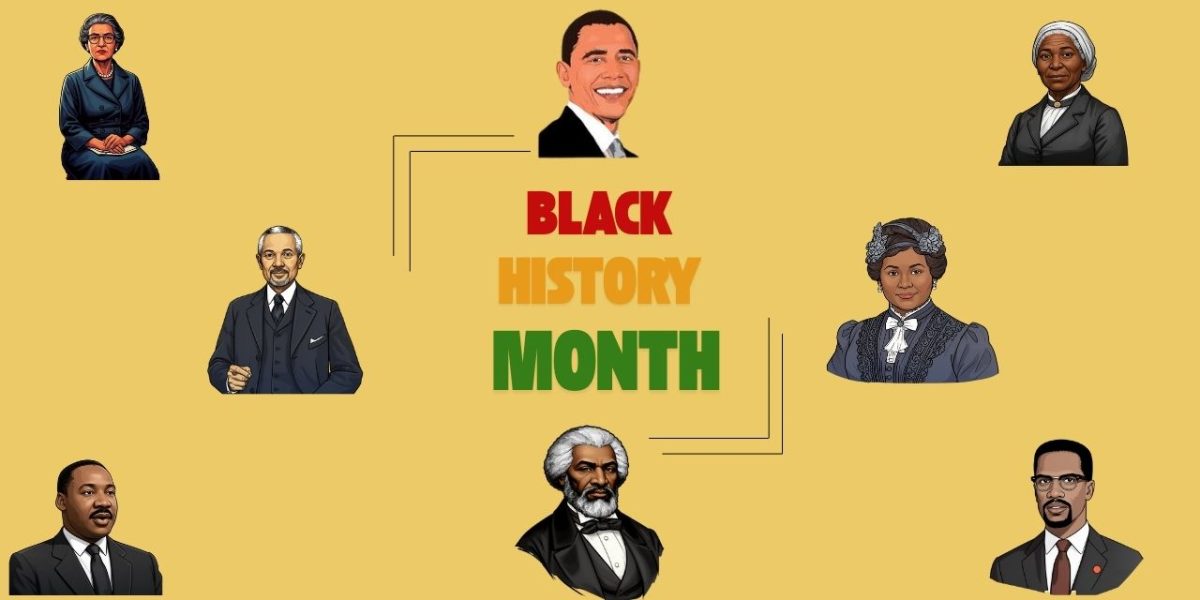
Black History Month is a time for people of African descent to reflect on what our ancestors did for us and how hard they had to work to get us where we are today. It’s also a time for people to reflect on how badly African Americans were treated, and how Black History Month became a month-long holiday.
Black History Month originally began as a week-long holiday, and the holiday’s original title was much more derogatory. Carter G. Woodson, an African American man who is known as the “father of Black history,” decided he wanted black history to become a study and to be taken more seriously. In 1926, Carter G.Woodson began educating people about the history and its culture. He was a historian and the founder and president of the Association for the Study of African American Life and History. His goal from the beginning was to elevate black history. By the late 1960s, Black History Week was officially Black History Month.
As the years went on, many more African Americans felt the same as Carter G.Woodson and wanted better for their community. Martin Luther King Jr. was a civil rights activist who led the Civil Rights Movement. This movement was a protest and fight against segregation and the inhumane ways African Americans were being treated. Rosa Parks was also a civil rights activist who is best known for refusing to give up her seat on a bus to a white person. She was sentenced to jail time and put out on bail. Her arrest triggered the 381-day Montgomery Bus Boycott. Malcolm Little, famously known as Malcolm X, was a major civil rights leader during the 1950s and 1960s. He believed in black pride, self-respect, and self-defense. Unlike some of the other African American leaders, Malcolm X believed black people should defend themselves by any means necessary. He encouraged independence and unity within the black community.
While leaders like Martin Luther King Jr., Rosa Parks, and Malcolm X helped change history, they are only part of a much bigger story. Black history is filled with scientists, inventors, artists, activists, and everyday people who pushed for change, and are still pushing in ways big and small. When we celebrate Black History Month, we should remember that this is bigger than just a few familiar names. It is built on the strength and intelligence of millions of African Americans whose stories need to be told. Black history is not something that we should just look back on, because it’s something that is still being written about in modern society.