















Overview
In the US, as of 2025, there are 16.2 million veterans and about 2.1 million active and reserve military personnel. This is about 6% of the population! None of those statistics includes the vast number of relatives and family members who are also affected by one’s deployment.
For the last two decades, there has been ongoing warfare in Afghanistan, and as a result, there has been an increase in veterans seeking mental health treatment. A significant number of these heroes have been deployed or served in combat. But it also affects those who participate in general military service.
The Different Branches
Each branch is unique in its own way.
The Air Force’s job is to execute military operations in the air, and the members are referred to as airmen. Their special forces team is Special Warfare. Airmen often face stress from the emotional pressure of remote warfare, surveillance, and high-stakes technical operations. They experience emotional fatigue, and while less discussed, it can still lead to a multitude of mental illnesses.
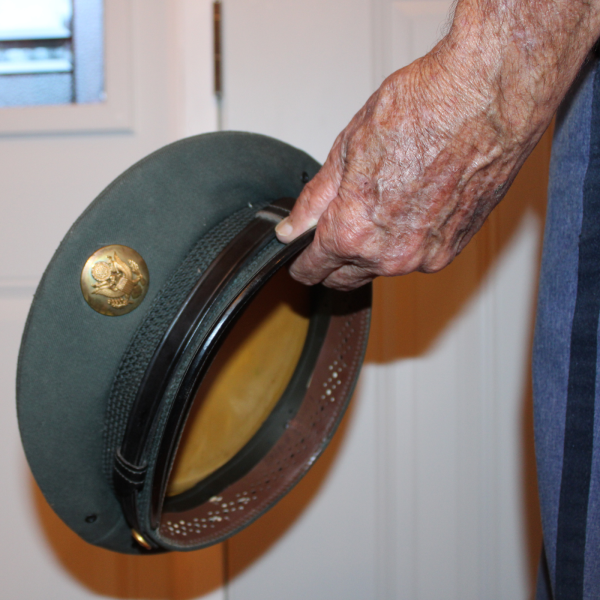
The Army conducts ground combat missions and is composed of soldiers. Their special forces team is named The Green Berets. The Army has the highest mental health rates for PTSD and depression.
Coast Guard members, referred to as coastguardsmen, enforce laws at sea, secure waterways, and lead search-and-rescue missions. Their special forces are referred to as the Maritime Security Response Team.
The Marine Corps assists other branches in air, land, and sea combat operations; they are referred to as Marines. This branch is often seen as the most mentally demanding due to the strict physical standards and intense emotional and psychological pressure that they face. The training is rigorous, missions are high-risk, and they are the first people engaging in combat. Long deployments, limited rest, and exposure to traumatic events can take a huge toll on a Marine’s health, and most feel like they have to bottle it all up; these silent battles make them especially vulnerable to PTSD, anxiety, and depression.
The Navy’s goal is to protect waterways and provide a runway for an aircraft while at sea. Their members are called sailors, and the special forces are known as the Navy SEALs. Sailors endure months at sea, confined environments, isolation, and limited communication with family. This environment has led to rising reports of alcohol abuse and depression, as stated on the SoberFirst Recovery website.
The Space Force members are called Guardians, and they have no special force. Their responsibilities include organizing, training, and equipping members to conduct global space operations.
Mental Health Disorders That Are Most Common in Veterans
Whether you served in the Army, Navy, or Coast Guard, no one is immune to mental illness. According to the National Library of Medicine, the most widely publicized mental health challenges veterans and service members encounter are post-traumatic stress disorder (PTSD) and depression. Research shows that 14%-16% of US service members who were deployed to Afghanistan and Iraq were affected by PTSD or depression. Other issues include suicide, substance use, interpersonal violence, and traumatic brain injury (TBI).
Post-Traumatic Stress Disorder
PTSD was officially recognized and codified in the Diagnostic and Statistical Manual of Mental Disorders (DSM-3) in 1980, driven partly by the sociopolitical aftermath of the Vietnam War, as stated in the National Library of Medicine. During World War I, it was called “shell shock”; in World War II, it was “war neurosis”. Throughout the Civil War, PTSD was dubbed the term “soldier’s heart”, and its last name was coined during the Vietnam War era, where it was called “combat fatigue”.
Usually, symptoms start within three months after a traumatic event, but sometimes they may not appear until a year after the event. According to The Mayo Clinic, these symptoms last more than one month and cause major problems in social or work situations, and affect how well you get along with others. The symptoms are grouped into four categories: intrusive thoughts, avoidance, negative changes in thinking and mood, and changes in physical and emotional reactions. Having PTSD can increase your risk of other mental health problems, such as depression and anxiety disorders, issues with drug or alcohol use, and suicidal thoughts or actions, as stated in The Mayo Clinic.
Depression
Depression isn’t a weakness, and you can’t just “snap out” of it. It is responsible for 9% of all walk-in military health appointments. Being separated from loved ones, the stress of combat, and being put in harm’s way are all contributors to an increased risk for depression. It can affect both active-duty personnel and veterans.
During depressive episodes, symptoms occur most of the day for nearly every day. According to the Mayo Clinic, symptoms include feelings of sadness, tearfulness, emptiness, or hopelessness, lack of energy, anxiety, agitation, slowed thinking, frequent or recurrent thoughts of death, suicidal thoughts and actions, etc.. Depression may require long-term treatment.
Substance Use Disorder (SUD)
According to the DSM-5, SUD is a group of behaviors that involve compulsive drug-seeking, which includes impaired control over drug use, dysfunctional social functioning due to drug use, and physiological changes resulting from drug consumption.
According to the National Library of Medicine, substances encompass various categories, including legal drugs such as caffeine, nicotine, and alcohol; prescription medications such as opioids, sedatives or hypnotics, and stimulants; and illicit drugs such as marijuana, cocaine, methamphetamines, heroin, hallucinogens, and inhalants.
A study conducted on military personnel revealed that approximately 30% of suicides and around 20% of deaths resulting from high-risk behavior were attributed to alcohol or drug use, as stated in the National Library of Medicine.
Suicide
In 2016, the Department of Veterans Affairs (VA) indicated that veteran suicide rates were 1.5 times higher than those of non-veterans. Veterans have an increased risk of health issues during their first year after leaving the military. With about 6,000 U.S. veteran suicides per year, overall suicide rates between 1999 and 2016 have increased by 30%. The suicide rates in the military doubled between 2000 and 2012, but since then, there has not been a significant change. There are about 19.74 deaths per 100,000 service members annually. According to a study conducted in 27 US states, it was estimated that veterans accounted for 17.8% of reported suicide cases.
VA General Rating Formula
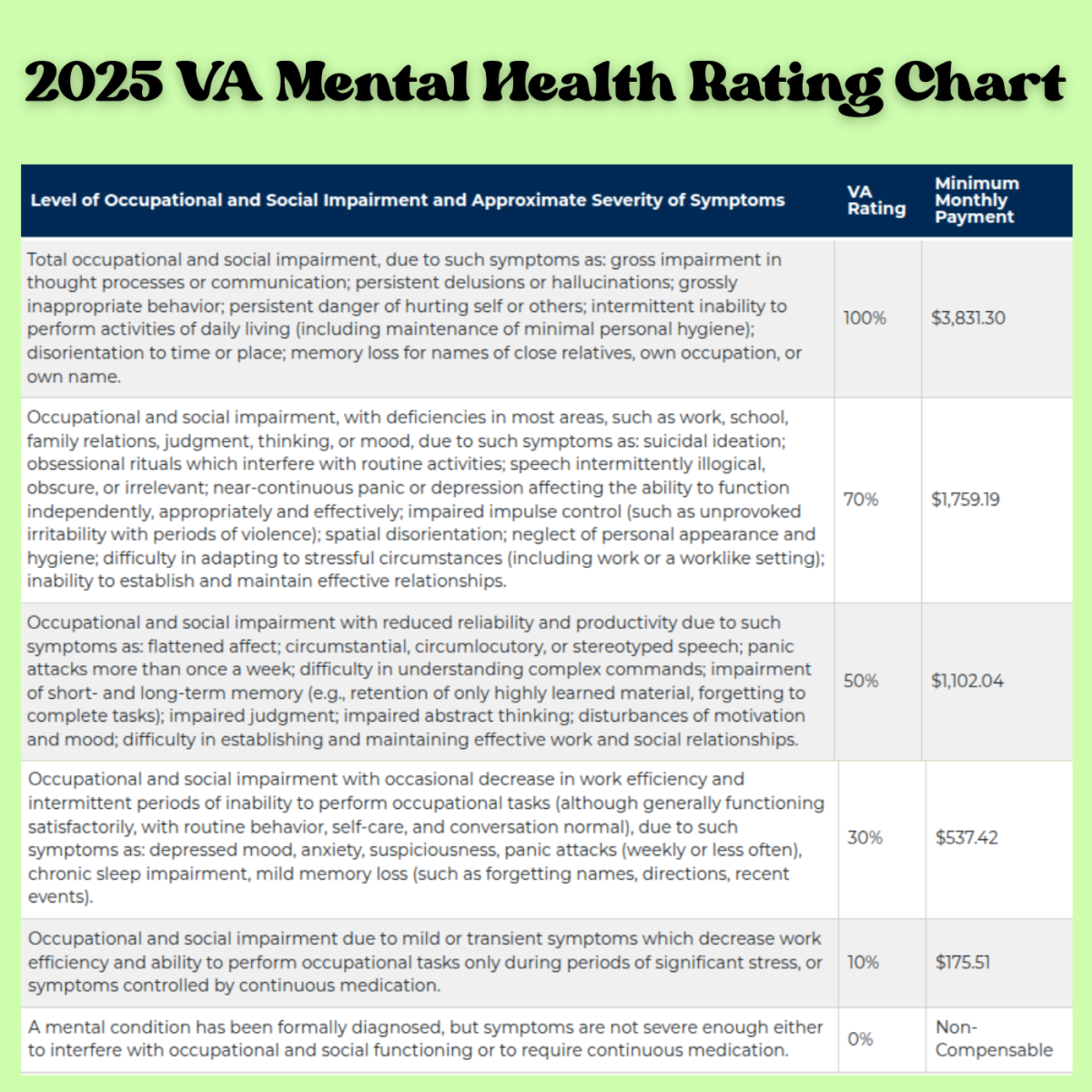
According to Brian Reese, a VA disability expert and founder of VA Claims Insider, the VA uses the General Rating Formula For Mental Disorder to rate mental health conditions from 0% to 100% with breaks at 10%, 30%, 50%, and 70%. First, there’s a subjective assessment of symptoms from the list of 31 VA mental health symptoms. Then there is a subjective assessment of how those symptoms affect occupational and social impairment—meaning your work, life, and social functioning. Finally, the online tool lists your approximate mental health rating; however, the VA Rater can override it and select a rating one level above or below the recommended disability percentage.
Why Do A Lot Of Veterans Go Untreated?
According to the Ballard Brief, many factors contribute to these statistics, including negative social stigmas surrounding mental health, mistrust of mental health professionals, a lack of publicity and communication about veteran benefits, and a limited amount of resources available to treat such a large population.