
Our environment is essential for all living things. It creates the air we breathe, the water we drink, and the soil in which we grow our food. If you want to learn more about what our St. Vincent-St. Mary High School students and staff are doing to help the Earth, as well as things you can do at home to help, you are in the right place.
What do you do during Earth Month, or year-round, that helps the Earth?
Student responses:
“I like to go outside and take in the elements! I also clean up trash when I go off-trail in the woods.”
– Ashlyn McGuinness VM29’
“Pick up litter, recycle religiously, drive [an] electric car, reduce plastic waste, be conscious of sunscreens, [and] eat organic food.”
– Nadia Hulgren VM28’
“I have a basic respect of the planet and the other people who walk it. Don’t litter, remove the filth.”
– Keith Tolbert VM27’
“Bike to normally-driven destinations that are close enough to bike to.”
– Will Morehouse VM26’
Staff Responses:
“I fortunately live in a neighborhood that gives people recycling bins, so I try my best to sort recyclable materials to be reused by the city!”
– Mr. Plumley
“Year-round, I gather my recycling and bring it to the school’s recycling bin. My apartment complex does not offer recycling, so I do it myself!”
– Miss. Schaeffer
“All year, but especially during Earth Week, I like to focus on the things I can do to help the environment; think globally, act locally, right? I am a classic treehugger: I always follow the rules for recycling (each city is different), I compost and use it in my garden, I plant native plants for our pollinators, I use energy efficient appliances & low-flow faucets to conserve water and electricity, I turn off lights when I am not in the room, I have a rain barrel system for my garden and I am a beekeeper. Yep, I am a nature-loving, homegrown, tree-hugging environmentalist!”
– Ms. Burch
“In Current & Future Issues, we do a unit on Sustainability. We talk a lot about plastic, its effect on the environment and our health, and ways to reduce plastic waste. During Earth month, I also watch for opportunities to recycle through special programs that take old electronics and other things.”
– Mrs. Drumm
Anything you want to add?
Student Responses:
“Helping our planet starts with us. If everyone were to pitch in, we would make a difference.”
– Dayne Dudsak VM29’
“It is so important to protect the earth all year round, and even the tiniest actions can have huge impacts when multiple people do them.”
– Kate Krabill VM28’
Staff Responses:
“When 80-97% of climate scientists say that we are putting the human race in danger by ignoring climate concerns, perhaps we should trust them and do something about it.”
– Mr. Salvatore
“It would be nice to see the Environmental Club return to STVM. We could work on projects such as aluminum can recycling.”
– Mrs. Drumm
4 Ways To Help The Environment
- Clean the Environment
I know you have heard time and time again to ‘pick up trash’ and ‘don’t litter,’ but it’s true. We need to help as much and as often as we can because “Humans, animals, and plants all suffer from land and water contaminated by improperly discarded garbage.” Only use what you need in order to cut down on trash in landfills.
- Plant Native Species
Plants and insects depend on each other, and when there is a lack of native plants, insects will eat other plants. This takes away food from other animals, such as birds. By planting just one native plant, you can provide the ecosystem with a food source and a place of refuge.
- Reduce Energy at Home
When you are at home, open windows instead of cranking up the AC. Air-dry your clothes instead of using a dryer, and wash them in cold water. Even switching to LED light sources helps reduce the energy you use within your home.
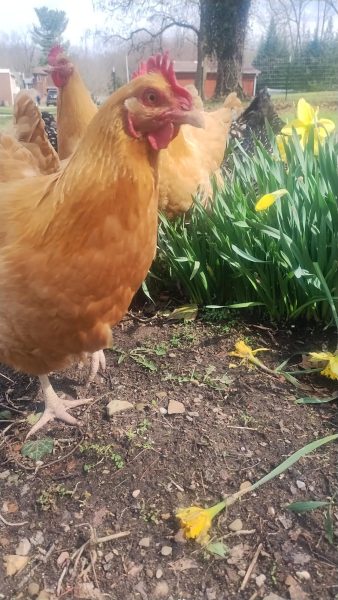
- Get a Flock of Backyard Chickens
Chickens act as nature’s very own pest control, fertilizer, and biorecycler. Chickens feed on the bugs in your backyard, gardens, and flower beds. They eradicate pests such as grasshoppers, beetles, larvae, and grubs.
Chicken manure is very high in nitrogen, making it a great fertilizer. After the manure goes through a chemical process in which the high numbers of ammonia break down into a usable format, you can spread it in your flower beds!
When you have some table scraps that you know are going to get thrown away, feed them to your chickens. They can eat almost anything, but only fruits and vegetables should be given daily. Four chickens can eat 400 pounds or more of food waste a year.
Now, Irish, don’t be a fossil fool, and go help the Earth!
